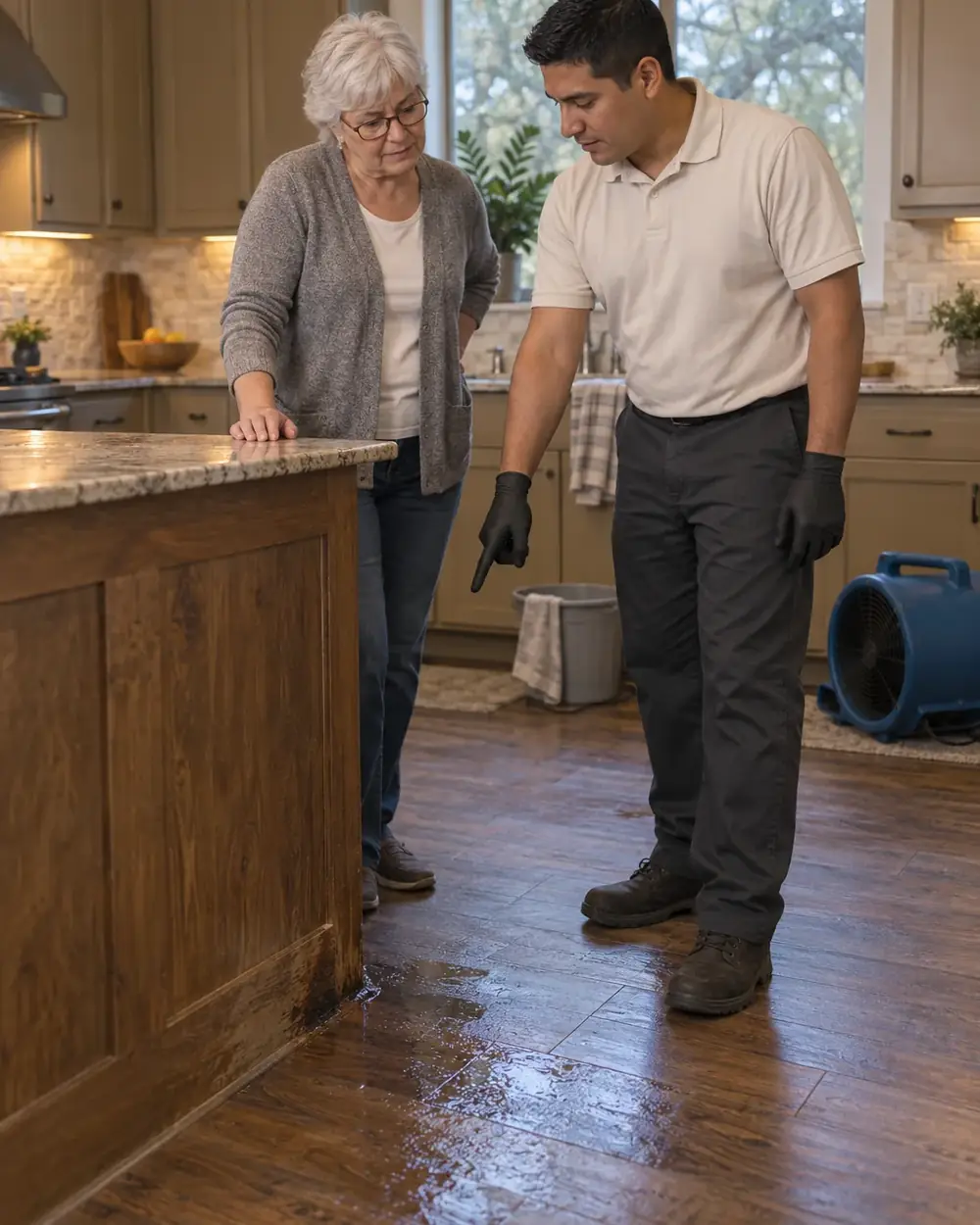
If you call about standing water
If water is pooling inside, the call starts with where the water is and whether it is still entering. Describe the rooms affected and any nearby outlets or electrical equipment. Stay outside wet areas where electrical safety is uncertain. Call from a dry, safe location.
- If the water came from a supply pipe within the last 48 hours, say when you noticed the leak and whether water is still flowing. Close an accessible household shutoff only if you can reach it safely. Call now to discuss extraction and drying.
- If the water has been there longer than 48 hours, tell the person answering about the delay, odors and changes to flooring. Time and appearance alone do not establish whether water is clean. Call to arrange an inspection.
- If water came from a sewer line, toilet waste or outdoor flooding, keep people and pets away from the wet area. Explain the source during the call so the cleanup plan addresses contamination. Call without entering the water.
If you call about a stain
If a ceiling or wall has a new stain, describe the mark and whether it is growing, dripping or soft. You do not need to open drywall or find the hidden leak to make the call. Mention whether the stain appeared after rain, plumbing use or an appliance leak.
If a ceiling is sagging, keep clear of the space beneath it and call from another room. If a mark looks dry but keeps returning, call about a moisture inspection. A dry surface does not show how much moisture remains behind the finish.
If you are ready to describe the problem
If you know your address, callback number and the approximate time the water appeared, share those details during the call. Explain any access concerns, such as a locked entry or an affected upstairs room. Photos and measurements are useful when already available; neither is a requirement for calling.
The call connects you with your technician, who sets the visit time and explains the inspection. If you are unsure where the water started, say so and call. Your technician checks the visible damage and uses moisture readings to investigate affected materials.
If the inspection finds trapped moisture
If moisture remains in flooring, walls or other materials, your technician explains the extraction and drying plan. The scope describes equipment placement, access to wet cavities and any materials that need removal. If moisture extends beyond the visible stain, the plan addresses the affected area rather than the mark alone. Call to discuss the inspection.
If you need to understand the price
If the damage is limited to accessible materials, the scope differs from a job involving several rooms, contamination or concealed moisture. You'll get an explanation of the proposed scope and pricing from one of our local water damage partners before the job begins. Call to discuss the proposed work and your questions.
If drying leads to repairs
If materials need repair after drying, your technician explains which work follows moisture checks. Painting or replacing finishes too soon can conceal remaining dampness. Photos, moisture readings and a written scope provide documentation for insurance. If you need to understand how drying and repairs fit together, call to discuss the sequence.